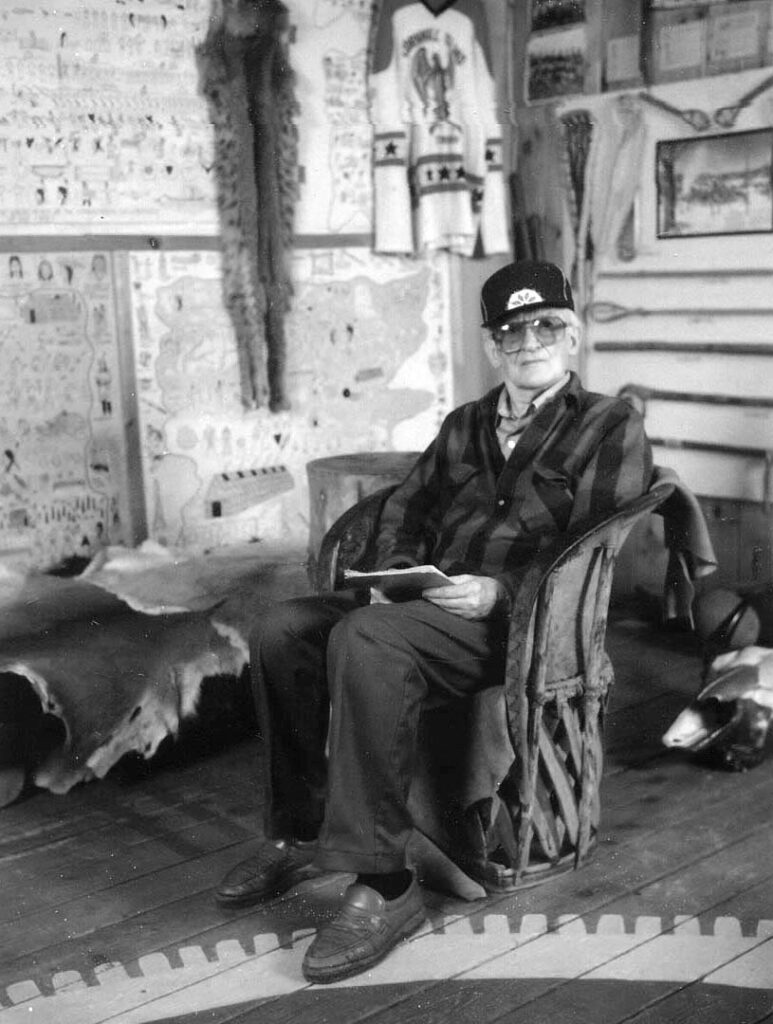
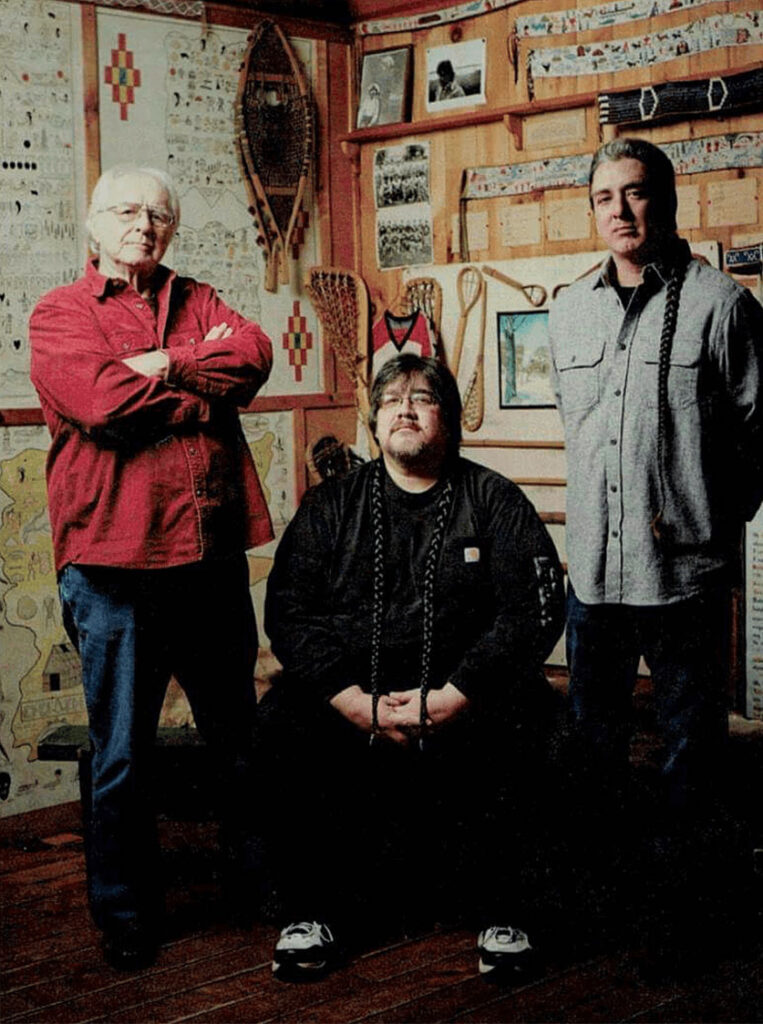
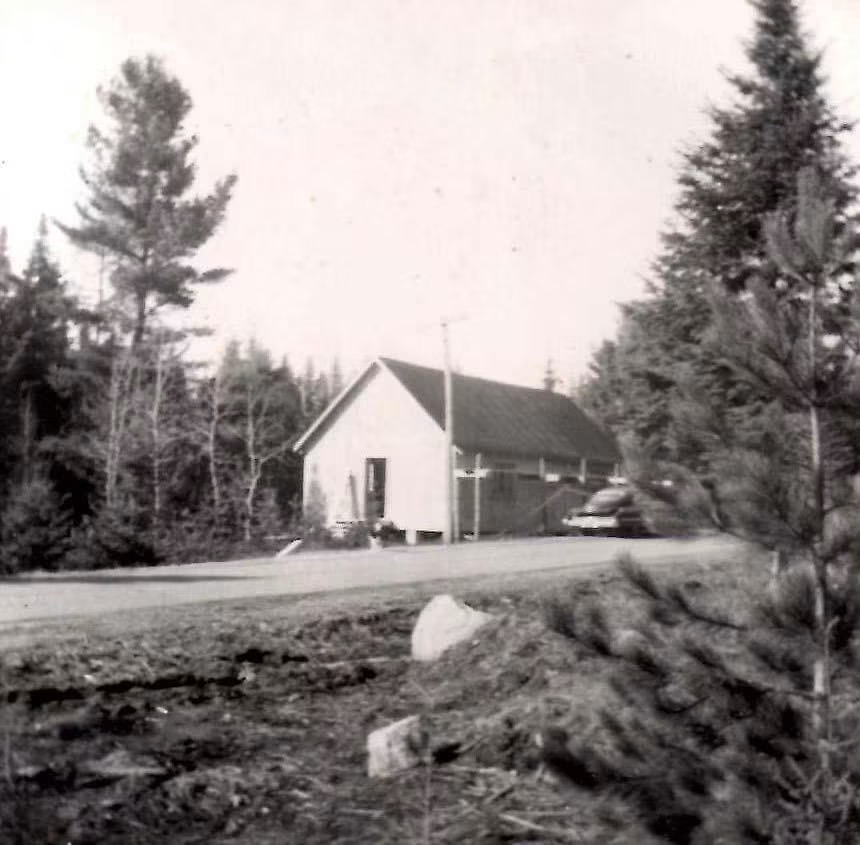
Ray, Christine, and John Fadden opened Six Nations Indian Museum for its first season during the summer of 1954 in the hamlet of Onchiota, NY nestled deep in the Adirondack Mountains. The Faddens began what is now a 70+ year long journey of welcoming local visitors and tourists from around the globe to learn more about the Haudenosaunee (known as the Six Nations to the English and the Iroquois to the French) and the First Nations of this continent. The mission and goal was to help dispel the myths and stereotypes about Indigenous people to not only the tourists who flood the Adirondacks during the warmer months but also to teach Onkwehonwe people about our own history and culture.
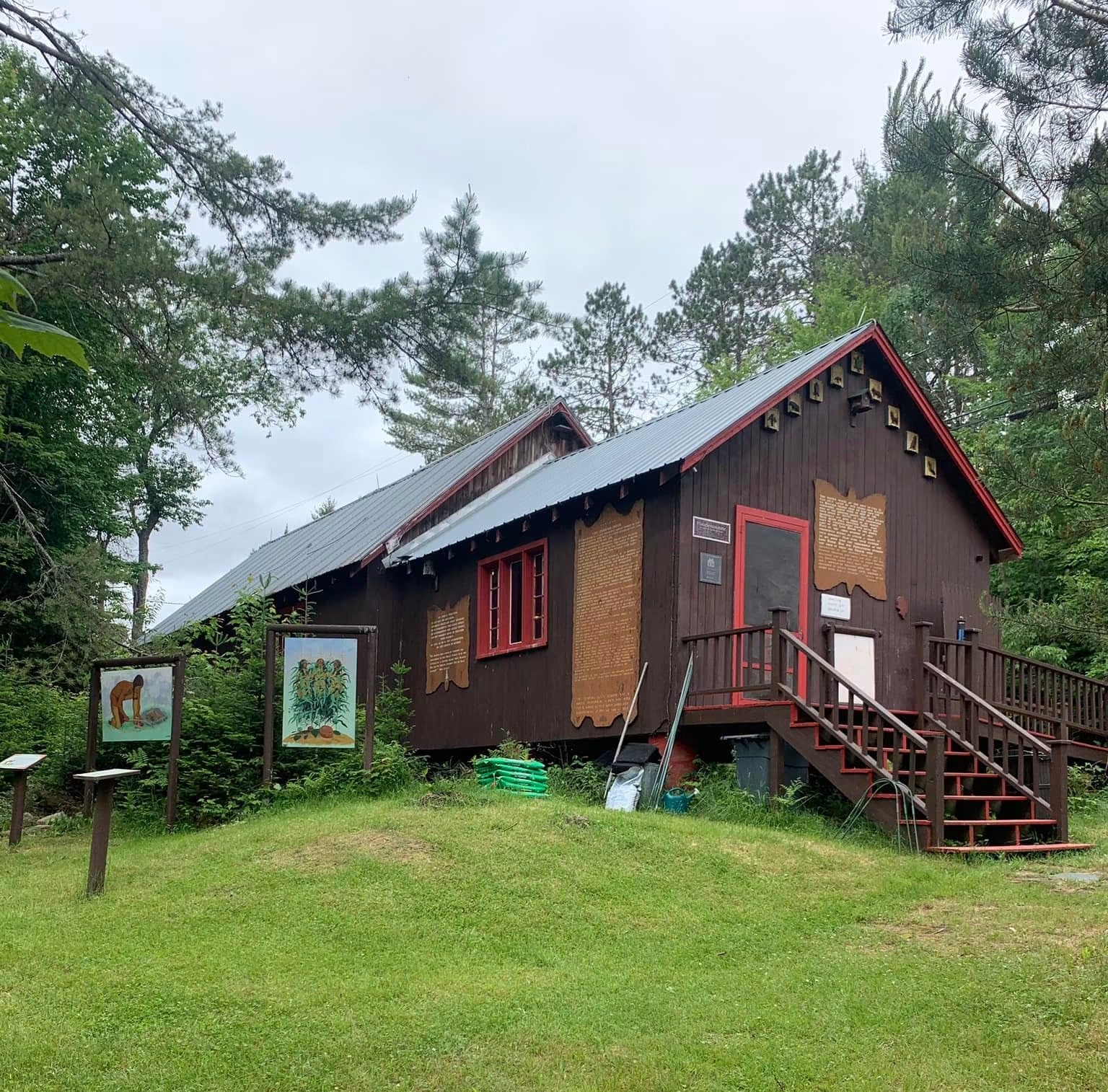
Ray got to work clearing the land, took the fallen trees to the mill, then used them to build the initial structure. The Center, originally two rooms large, expanded to four rooms producing a building approximately 80′ x 20′. The Center’s design reflects the architecture of a traditional Haudenosaunee bark house. This is significant because the word Haudenosaunee translates to The People of the Longhouse. The Haudenosaunee are made up of of six nations; Kanien’kehaka (Mohawk), Onyotaʼa:ka (Onedia), Onoñdaʼgegáʼ (Onondaga), Gayogo̱hó꞉nǫʼ (Cayuga), Onöndowa’ga:’ (Seneca), and later the Skarù·ręʔ (Tuscarora). The Mohawks are the Keepers of the Eastern Door, the Senecas are the Keepers of the Western Door, the Onondagas are the Fire Keepers and the Oneidas, Cayugas, and Tuscaroras (admitted into the Confederation in the early 18th century) are the Younger Brothers.
The Center houses a myriad of pre-contact, and post-contact artifacts, contemporary arts and crafts, diagrammatic charts, posters, and other items of Haudenosaunee culture. The objects within the center are primarily representative of the Haudenosaunee, but there are representations of other Native American cultures as well. The floors are decorated with Haudenosaunee symbols & motifs, and within the rooms are cases exhibiting artifacts. The walls are laden with informative charts, beaded belts, paintings and other Indigenous items of interest. Up into the peaked ceiling of each room are representations of Native America as they are covered with artifacts including canoes, baskets, tools, beadwork, feathered headgear, Native clothing, and posters.